Get In-Depth Data to Fuel Your Strategy
AI is helping sponsorship leaders move faster. The harder question is how to turn that speed into better decisions.
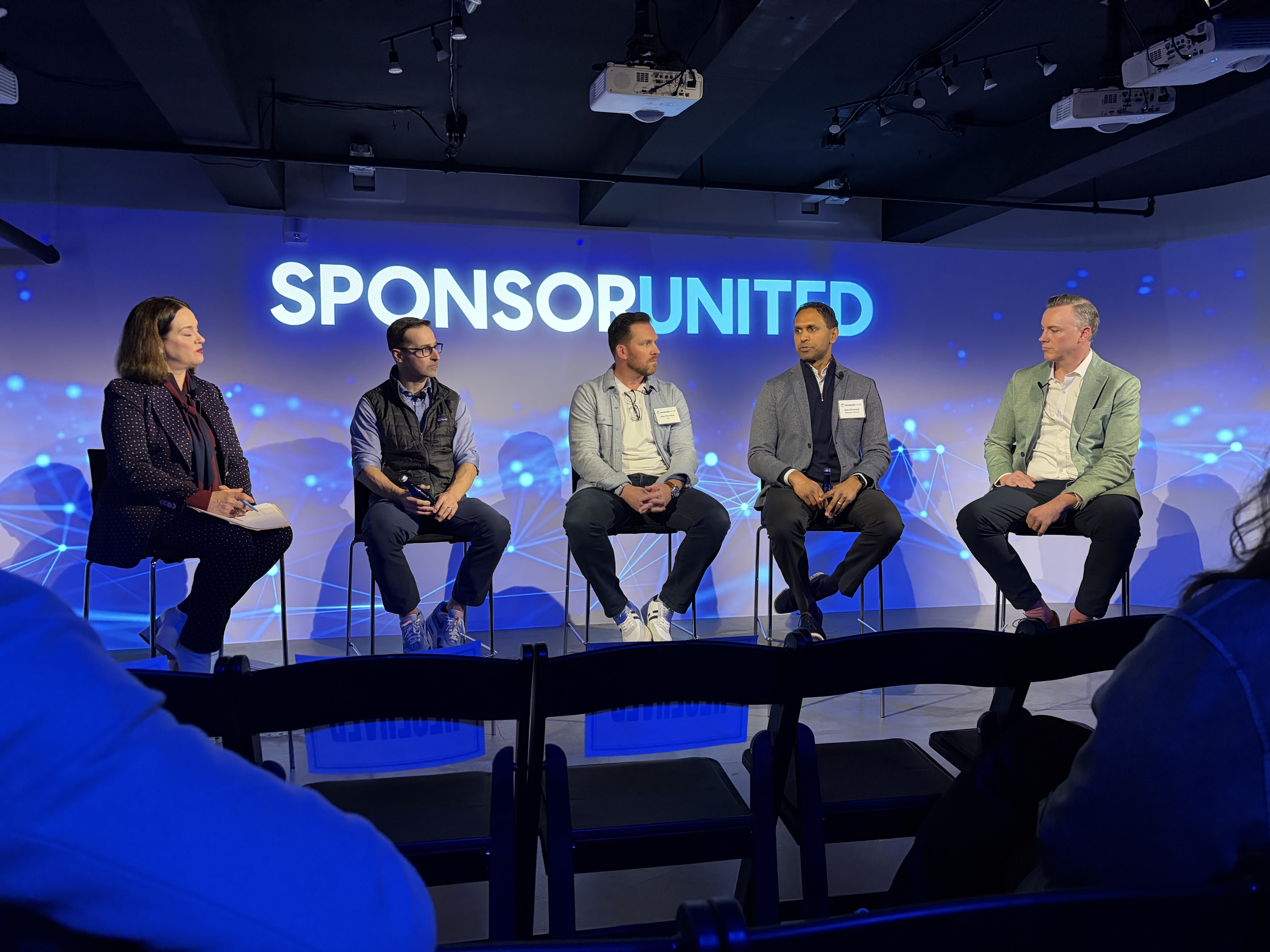
That theme ran through the panel at The Intelligence Edge, hosted by SponsorUnited in partnership with Sports Business Journal in New York City on November 17. Jason Sinnarajah of the Washington Nationals, Justin Toman of Verizon, Allen Hermeling of UnitedHealth Group, and SponsorUnited Founder and CEO Bob Lynch explored how AI is changing the work behind sponsorship decisions.
Across the discussion, a practical view emerged: AI can accelerate research, create new workflows, and help teams evaluate opportunities. Getting value from it still requires context, judgment, and a clear understanding of business needs.
Give experimentation a business purpose
For Lynch, that process began with encouraging experimentation. He recalled wanting employees to approach AI like kids exploring a playground—with curiosity and room to discover what it could do.
The ambition extended beyond finding immediate efficiencies. He wanted employees to consider what AI could mean for SponsorUnited over the long term: how it could help drive business, strengthen the organization’s capabilities, and become an effective, impactful part of how people work.
That approach gave exploration a business purpose. Trying new tools could help employees understand their potential while identifying applications that deserved further investment.
Build AI into everyday workflows
Turning experimentation into everyday value takes more than access to a tool. Teams need to understand where AI fits into their work, which tasks it can support, and how to evaluate the results.
The level of research should match the decision at hand. A quick answer might be enough for one task. Another might demand deeper research, follow-up questions, and more business context.
Building useful habits around AI requires clarity about what a strong output looks like and when human review matters. For sponsorship professionals, that means connecting the research to the proposal, negotiation, or activation it is intended to inform.
Look beyond your category for ideas
AI can also help teams look beyond their immediate category for ideas. A business facing a customer engagement challenge may have something to learn from how another industry builds loyalty or sustains relationships.
For sponsorship teams, that opens up a useful question: which businesses outside your usual comparison set have addressed a similar challenge, and what could you learn from their approach?
Those findings can provide a starting point. Teams still need to assess what fits their business, test ideas in practice, and refine the approach over time.
Connect faster research to better decisions
The broader opportunity is to connect individual uses of AI to better ways of working. Faster research becomes more useful when teams have a clear process for reviewing findings, developing recommendations, and deciding what to do next.
That changes how teams assess where to put their resources. Faster research has value, but its larger contribution depends on what it enables: more informed recommendations, greater capacity to explore opportunities, or more time devoted to work that requires experience and judgment.
Measurement brings those objectives into focus. Organizations bring different priorities and expectations to their partnerships, so the definition of success will vary. AI can help organize and analyze information, but teams still need to define the outcomes that matter and determine how to assess them.
Keep business objectives and human judgment at the center
Across these themes, getting value from AI requires continued learning and adjustment. Experimentation helps teams discover possibilities. Clear workflows make those discoveries repeatable. Business objectives give them direction.
The quality of the question, the context behind it, and the judgment applied to the answer remain central. AI is expanding what teams can investigate and how quickly they can act. Leaders still have to decide which opportunities deserve their attention—and what to do next.