.png)
Get In-Depth Data to Fuel Your Strategy
What the debut class, the iron core, and the most innovative activations of 2026 reveal about where festival sponsorship is headed.
Coachella wrapped its 2026 edition on April 19, closing out two weekends that drew more than 100,000 attendees per day to the Empire Polo Club. The on-stage lineup gets most of the coverage, but the brand activation ecosystem has quietly become a parallel festival of its own — and 2026 marked a clear inflection point in how brands choose to show up at the desert.
The defining theme of this year's activation class wasn't scale. It was depth. Across the debut roster and the returning anchors alike, brands arrived with fully built experiential worlds — category lock-outs, multi-asset footprints, and activations engineered for the feed and the feeling, not just the footprint. That shift in approach is the real Coachella 2026 story.
The Iron Core: Long-Tenured Anchors Setting the Bar
Every great sponsorship roster is anchored by deeply tenured relationships, and Coachella's 2026 lineup is no exception. Heineken is the most visible — now in its 23rd consecutive year as Coachella's official beer sponsor and carrying 23 assets across the 2026 footprint, the largest of any brand at the festival. The brand's 2026 centerpiece, "The Clinker," is a smart device that lights up when two Heineken cans make contact, syncing with each user's Spotify or YouTube Music data to show their music-taste overlap and enabling them to share social handles. It is less a sponsorship activation than a parallel social layer built on top of the festival — exactly the kind of thinking that only makes sense when you have two decades of equity to draw on.
Method (SC Johnson) is now in its third consecutive year as the festival's official body wash, shampoo, and conditioner sponsor, and 2026 was its largest activation yet — four immersive sensory portals across the Main Grounds and Campgrounds, plus a Method × Ulta Beauty off-site oasis. Aperol — now in its fourth year as Coachella's Official Spritz — debuted its Day Club this year with 19 assets including Club/Bar Naming Rights, lounge seating, live DJ sets, and a surprise pop-up appearance from Joe Jonas. That kind of year-over-year activation expansion is what tenure makes possible: every successive year compounds into a bigger, more confident creative swing.
The 2026 Debut Class: Fully Built Brand Worlds
A standout share of the 2026 roster activated at Coachella for the first time, and the unifying theme across the debut class was depth. Every new sponsor arrived with a fully built experiential world rather than a logo and a tent. A few stood out.
Gap — Hoodie House
Gap debuted as the festival's exclusive apparel sponsor and official merch partner — a significant category lock-out — anchored by 14 assets and the "Hoodie House" immersive hub. The centerpiece was a limited-edition Gap x Coachella hoodie that attendees personalized on-site with custom patches, drawstring beads, and collectible bag charms released daily across both weekends. Per publicly reported Weekend 1 activation data, the brand delivered over 1M content views (+35% vs. target), 10 creator teasers against a target of 5, and a Google Trends search spike of roughly 5,000% — the kind of organic lift that indicates the activation broke out of the festival bubble into broader culture.
medicube — Glow Lounge
Korean skincare brand medicube (APR Corporation) used Coachella as the launch vehicle for its largest U.S. consumer activation to date — a bold statement for an international brand entering the American market through experiential. The 13-asset footprint included Club Naming Rights, an interactive karaoke lounge near the General Admission entrance, "Get Ready With Me" stations, and a central Glow Lounge in the Campgrounds. The campground placement was a particularly smart strategic choice, capturing attendees in their most relaxed, dwell-time-heavy moments. medicube's debut is a signal that K-beauty is ready to play at the highest level of U.S. experiential marketing — and that Coachella is increasingly where international brands choose to introduce themselves.
Magnum Ice Cream — The Spray Bar
Magnum made history at Coachella 2026 as the festival's first-ever frozen dessert sponsor — a category lock-out that, in retrospect, seems almost too obvious. A premium ice cream brand, in the desert, in April. The centerpiece was The Spray Bar in the 12 Peaks VIP area near the Main Stage, where pass holders customized chocolate-dipped Magnum bars with edible spray paint to match their festival outfits. Beyond VIP, Magnum extended its full portfolio — Magnum, Popsicle, Yasso, Klondike, Good Humor — across the festival grounds, and a pre-festival sweepstakes (two winners receiving GA Weekend Passes plus travel and lodging) extended awareness well beyond the gates. The activation turned the product into a snack, a fashion accessory, and a photo prop simultaneously — three things that drive organic festival content.
HBO — Euphoria Under the Stars
HBO didn't build a booth or a lounge. Instead, it screened the Season 3 premiere of Euphoria live in the Campgrounds at 11:59 p.m. PT on Sunday, April 12 — immediately following Karol G's closing headline set — making it the first-ever television series to premiere at Coachella. The timing was surgical: an emotional peak audience, no tickets or VIP tiers, just a wristband and a spot under the stars. Euphoria is one of the most festival-coded properties on television, and the audience overlap with Coachella is essentially total. This was less a sponsorship activation than a cultural event that happens to be a marketing moment.
Honorable mentions
e.l.f. Beauty's "e.l.f.scape" inverted the festival's typical exclusivity playbook — no velvet ropes, no invite-only access — and reportedly generated some of the highest organic content volumes of the entire event. Mattel's "You Can Be Any Barbie" debuted with a mirrored pink facade, a Charm Bar, and dual celebrity anchors in Paris Hilton (via hologram) and Olandria Carthen. Wavytalk turned the festival into a live salon with bubble braids, butterfly clip waves, and bouncy blowouts across 13 assets as the official hairstyling tools sponsor. Starbucks debuted The Coachella Coffeehouse with daily complimentary drink drops including the limited-window return of the Unicorn Frappuccino. Different categories, different playbooks — same depth-first approach.
The Returning Partners Pushing the Format Forward
The most interesting innovation at Coachella 2026 didn't only come from the debut class. Several returning partners used their tenure to build activations that few first-time sponsors could attempt.
Pinterest ran the most counter-cultural play of the festival: a phone-free zone. The 13-asset "Trend Discovery Activation" invited attendees to create custom charms, personalize stickers, and design postcards inspired by Pinterest's live trend data — all without touching their devices. The irony of a digital platform championing analog creativity at the world's most-photographed festival generated enormous buzz, and the phone-free mechanic drove dwell time in a way most activations can't.
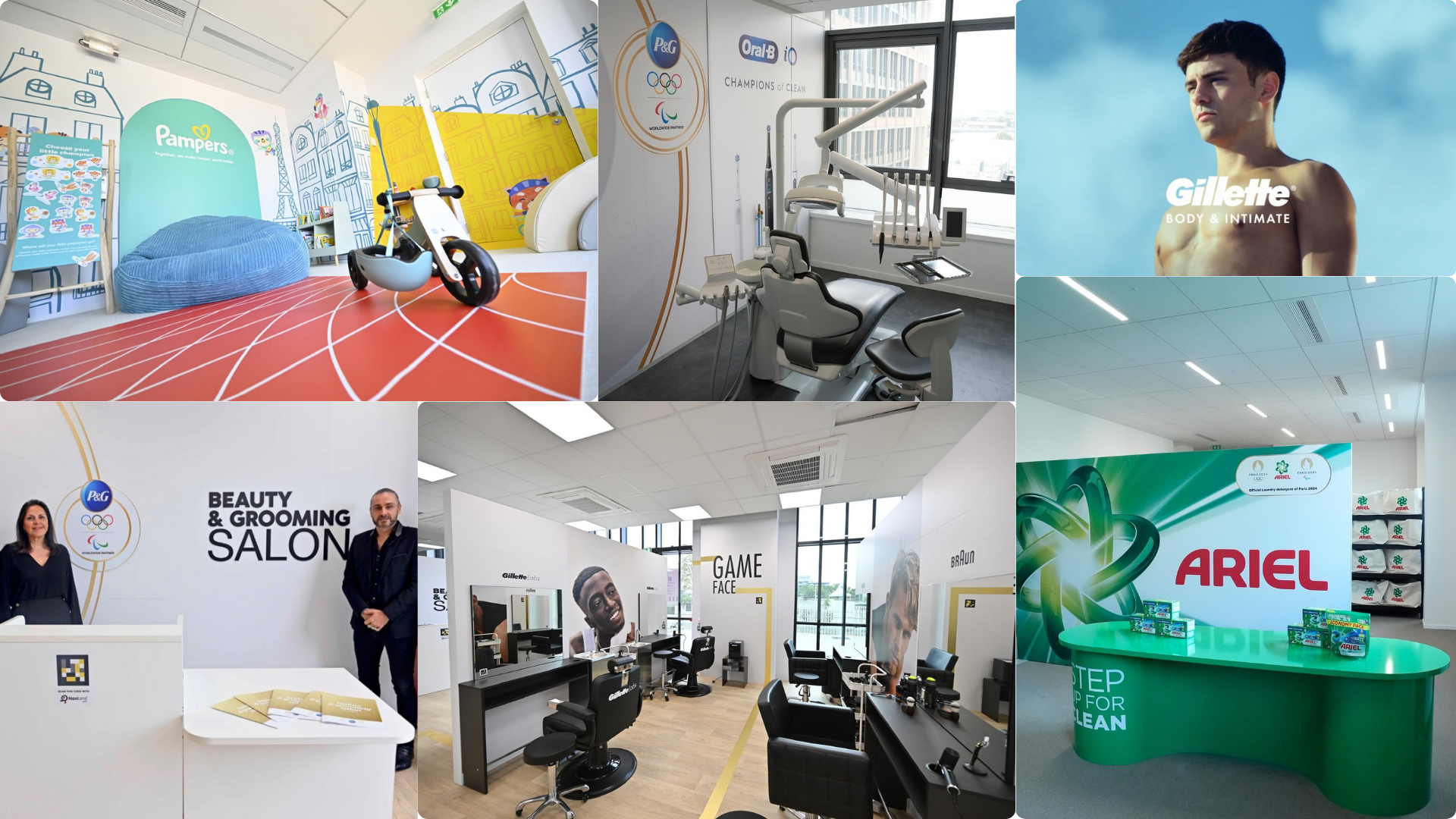
Always and Secret — both Procter & Gamble brands — co-activated The Refresh Room, the most strategically coordinated parent-company play of the festival. The activation was built on commissioned P&G research showing that 57% of women rank clean restrooms as their top festival priority, and 64% say being on their period can negatively impact their festival experience. Rather than respond with a campaign, P&G responded with infrastructure: a 30×30 air-conditioned VIP "Porta-Party" with luxury toilet trailers, hand sanitizer, water stations, and complimentary product sampling — featuring Always Pocket FlexFoam and the limited-edition Secret Mocktails Collection. It was an activation that felt less like a sponsorship and more like a public service with a brand attached, and it's a textbook example of portfolio synergy: two brands, one insight, one activation, exponentially more impact than either could achieve alone.
On the technology side, Google Gemini was the only confirmed AI/ML brand at Coachella 2026, but it activated in two categorically new ways: as an AI artist discovery engine embedded directly in the official Coachella app, and as a Gemini API-powered photobooth on the festival grounds delivering both physical prints and digital shares. With AI/ML deal activity growing more than 100% across the full Music Festivals league in 2026, Google's integration is a leading signal of where the category is headed.
What This Means for Rightsholders and Brands
The 2026 Coachella activation class is a case study in what a healthy, maturing festival sponsorship ecosystem looks like. A few takeaways worth bringing into renewal and pitch conversations.
- Depth is the new differentiator. Across the 2026 class, the strongest activations weren't the loudest — they were the most fully built. Multi-asset footprints, category lock-outs, and integrated experiential worlds are increasingly the price of entry for marquee festival sponsorship, not a stretch goal.
- The iron core is the ballast. Multi-decade relationships like Heineken, and multi-year anchors like American Express, Google, Pernod Ricard, Method, and Aperol, are the foundation that makes the rest of the roster possible. Tenure is where category narratives compound and where the most ambitious activations — Heineken's Clinker, Method's four-portal expansion, Aperol's Day Club — actually become possible.
- Category lock-outs are the new debut playbook. Gap as the exclusive apparel sponsor, Magnum as the first-ever frozen dessert sponsor, Wavytalk as the official hairstyling tools sponsor — debut brands are increasingly arriving with category exclusivity as part of the package. That's a structural advantage for both sides: the brand gets a defensible position, and the rightsholder gets a deeper renewal anchor.
- Portfolio sponsors are a growing opportunity. The Always × Secret co-activation shows what happens when a parent company coordinates across brands rather than activating them independently. For rightsholders working with multi-brand parents like P&G, Pernod Ricard, or Alphabet, there is real upside in pitching coordinated activations rather than separate deals.
- Fashion, beauty, K-beauty, AI, and entertainment are the fastest-growing lanes. Gap, e.l.f., medicube, Wavytalk, Mattel, Magnum, HBO, Google Gemini — the 2026 debut and innovation classes pressed on the same insight: Coachella is now as much a cultural content platform as it is a music festival. Brands that treat it that way — building for the feed and the feeling, not just the footprint — are getting the best returns.
Coachella is still the most coveted brand stage in live music, and the 2026 activation class shows why. From Heineken's 23rd-year Clinker innovation to Magnum's first-ever frozen dessert lock-out, from Pinterest's phone-free zone to P&G's research-backed Refresh Room, the brands that won the desert in 2026 weren't the ones that showed up — they were the ones that built. For rightsholders and brand partners, the signal is clear: depth compounds, tenure pays, and the activations that double as cultural moments are the ones that earn renewal.
.png)
.png)
.png)
.png)
.png)
.png)
%20(2).png)
.png)
.png)
.png)
.png)
.png)
.png)
%20(1).png)
.png)
.png)
.png)
.png)
.png)

.png)
.png)
%20(1).png)

.png)
.png)
.png)
.png)
.png)
.png)
.png)
.png)
.png)





.png)


















.jpg)