%20(1).png)
Get In-Depth Data to Fuel Your Strategy
As fan demand surges around culturally relevant products, brands have an opportunity to rethink merch as a driver of engagement, media, and memory. Here we share insights from BDA’s Steve Avanessian.
When the Seattle Mariners unveiled their Ichiro Suzuki replica statue giveaway earlier this season, fans didn’t just show up — they lined up overnight. The reveal quickly exploded across social media, with collectors, fans, and sports media treating the promotion less like a standard giveaway and more like the launch of a cultural artifact.
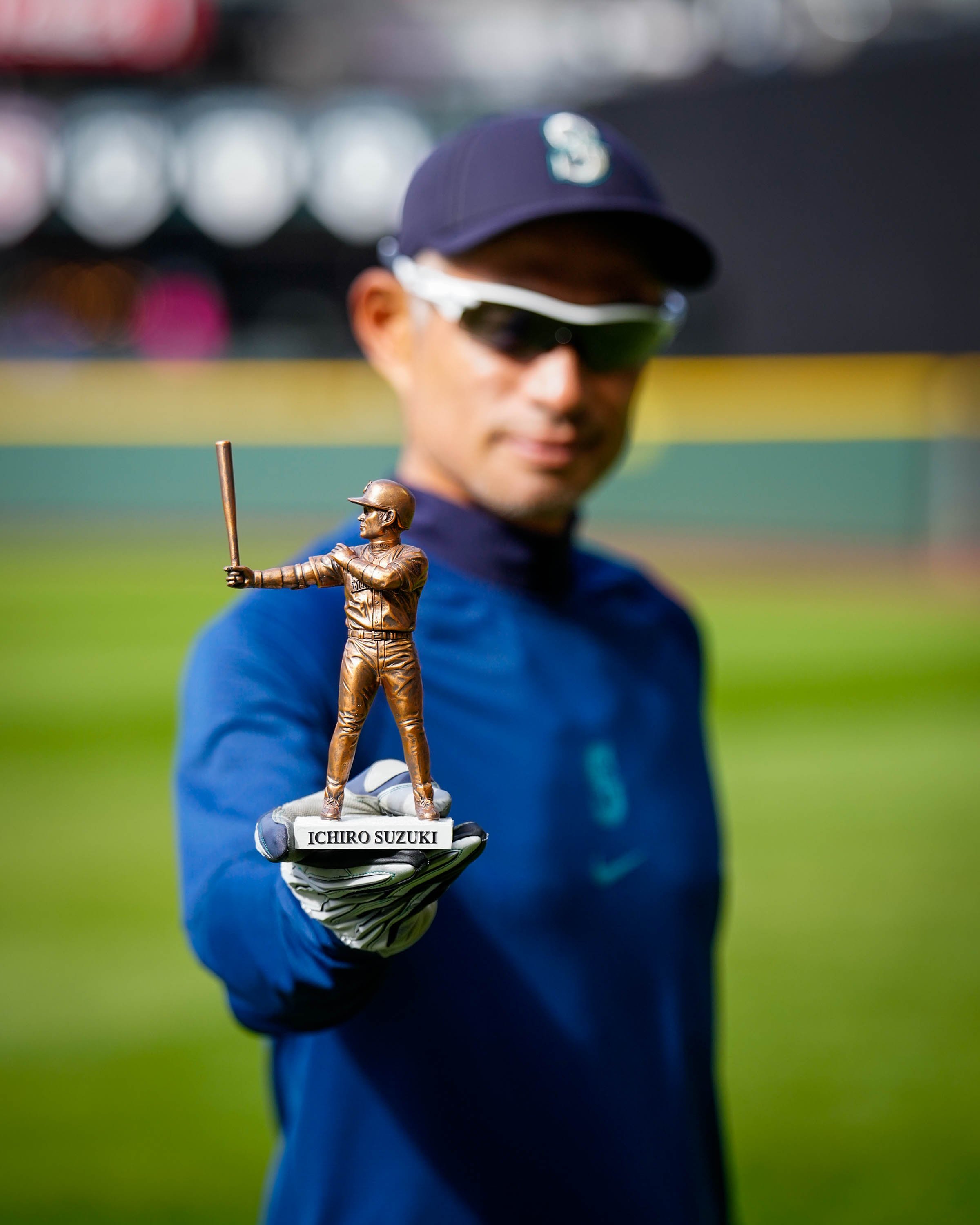
That reaction says a lot about where sports merchandise sits today. The right item no longer simply commemorates a moment; it creates one. It drives attendance, fuels online conversation, generates earned media, and gives fans a tangible connection to the teams and brands they care about most.
These moments reflect a broader shift in how merchandise functions within sports and brand marketing. The most effective items drive attendance, generate earned media, and give fans a tangible way to participate in a moment that matters.
For brand marketers, that evolution carries real implications. Merchandise increasingly represents the point where sponsorship strategy becomes tangible — where a brand moves from visibility into something fans hold onto, display, and revisit over time.
To better understand how brands should approach this landscape, we spoke with Steve Avanessian, Executive Vice President of Client Services – Sports at BDA, a longtime leader in merchandise strategy and execution across major leagues and global brands.
“At its core, my job is about partnerships,” says Avanessian. “I work closely with teams, leagues and brands to bring their stories to life through merchandise and activation, ensuring that every touchpoint and piece of branded merchandise deepens the connection between a fan and the team or brand they love.”
In the conversation below, he shares how merchandise can elevate sponsorships, what separates high-impact items from forgettable giveaways, and where brands should be focusing next.
Tell us a bit about what BDA does and how you fit into the sponsorship and merchandise space?
BDA is the modern merchandise agency for iconic brands. For over 40 years, BDA has partnered with the biggest names in sports, entertainment, and global enterprise to design, produce, and execute the merchandise and promotional experiences that shape how fans and consumers engage with a brand.
Where we fit in is at the intersection of strategy and execution. We’re not simply making items. Whether it’s a season-long activation, a theme night, or a major moment, my team ensures that merchandise becomes a meaningful part of the experience. It needs to support the sponsor’s objectives, resonate with fans, and reflect the quality that they deserve and we represent. Our role is to be the trusted partner teams can rely on.
How does merchandise enhance a sponsorship experience for fans?
Merchandise is the moment where a fan takes the experience home with them, and if we do our job right, it’s not just an item; it’s a memory.
A well-thought-out giveaway, collectible or premium item can instantly transform a sponsorship from signage into storytelling. It gives fans something to engage with, talk about, share socially, and keep long after the game ends. It deepens their relationship both with the team and the sponsor who made that moment possible.
And there’s responsibility in that. Fans may only get a handful of chances in their lifetime to be inside the stadium of the team they love. When they walk away with something that represents that day, maybe a bobblehead from the last game they ever attended with a parent, or a rally towel from a playoff run, it becomes part of their personal history. That’s why we obsess over every detail, as it creates a powerful, forever memory in their lives.
Beyond bobbleheads, what other types of merchandise are especially impactful right now?
Merchandise is much more than bobbleheads at a sporting event. It is branded shirts, bags, hats, scarves, flags, jackets — the list is endless. That is because it serves a different purpose and has new meaning to every brand and their customers. For some brands, the best way to reach their audience is through apparel that can be worn to show they are part of a larger community, such as sports jerseys and hats. For others, it is sustainable products that align with their ESG initiatives, such as company bags made from recycled materials. And for another group, it is products that enable them to reach their audiences in surprising ways, such as Olive Garden’s bread stick pool floats.
We work directly with our clients to better understand their audiences and develop a strategy and products that align with their company goals, values and audience expectations. Products that hit the right tone with customers – regardless of what shape or color they come in – will always be the most impactful.
You spend a lot of time thinking about bobbleheads—why are they such an impactful asset?
Bobbleheads are a fan favorite because they are the ultimate collectible. They capture a moment in time for a fan in a way no other item can. The three-dimensional element creates a completely different experience than a trading card or a photo. Bobbleheads live in a fan’s everyday environment, whether that is a bedroom, an office, or a display shelf.
For teams, they are incredibly powerful for driving attendance. Fans line up for hours, and sometimes overnight, to be among the first through the gates for a chance to collect these highly sought after mementos. They hold emotional value, and that is what makes them so impactful.
Bobbleheads have been closely associated with baseball historically. How has that changed?
Bobbleheads are just one example of merchandise that is present in our everyday lives. While closely associated with sports, they are now part of pop culture and depict actors, fictional characters, and even company CEOs. They are more than just whimsical caricatures of an individual – they represent a connection, a moment in time to be remembered. That connection transcends industries.
What’s the most surprising or innovative merchandise activation you’ve worked on recently?
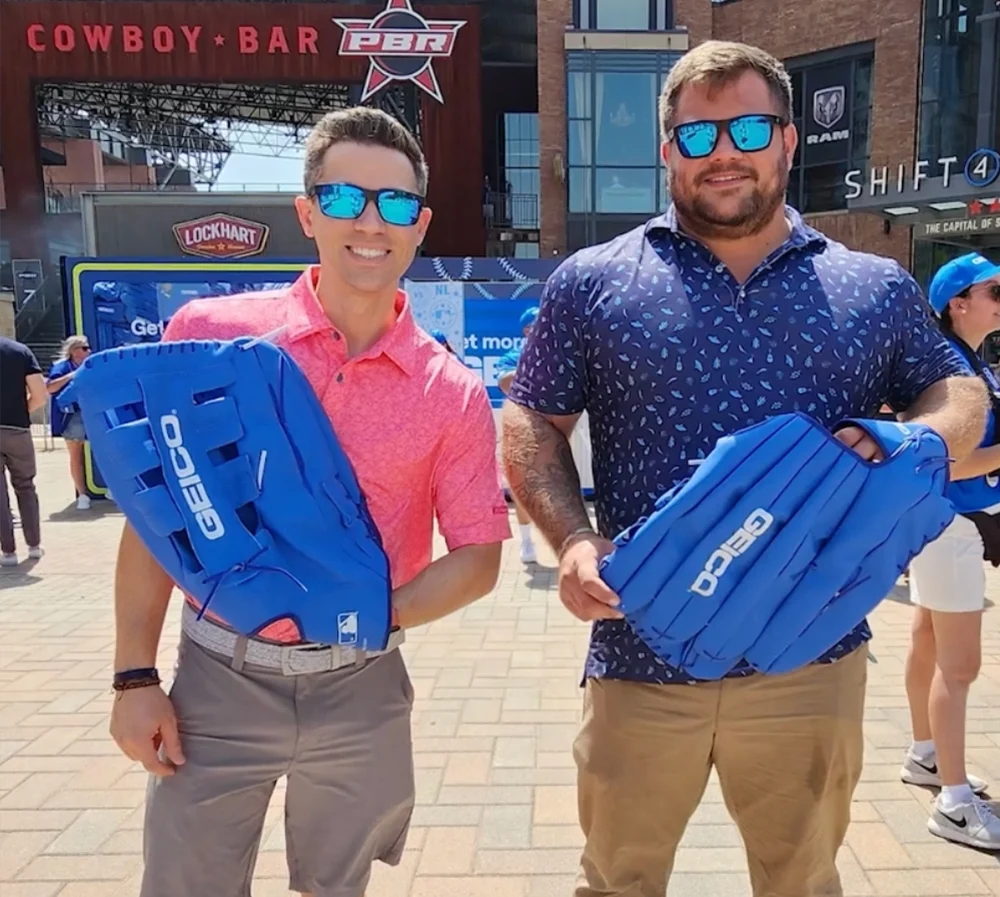
We created a commemorative oversized glove for the Home Run Derby at Truist Park in Atlanta this past July. The glove was GEICO branded and generated millions of impressions on national television throughout the Derby. We knew it would be a fun promotion because our internal team was excited about it, but we did not anticipate the level of fandom it inspired.
Throughout the entire All-Star experience, people carried the glove with them and brought it back into the stadium for the game itself. You never really know when something will take off, and this activation had a very natural and organic momentum. People connected with it immediately because it was so visual and such a standout piece. It is always a home run when we support major league events with merchandise that excites fans and looks great on television.
How do you see technology—ike AR, QR codes, or digital tie-ins—shaping the future of merchandise?
When you work in fan promotions, you have to stay aligned with how fans live their everyday lives. Technology is woven into everything people do, so we look for ways to integrate it into giveaways and make it easy for fans to engage.
This year we executed two Washington Nationals giveaways that included embedded chips, and we used QR codes to make online product registration effortless. As new technologies emerge, we will continue to evolve our approach. The possibilities feel endless right now.
Even with that innovation, I do not believe there is a true replacement for a dimensional physical item that a fan can connect with. Technology should enhance the product and create more enthusiasm around it, but the item itself still needs to feel authentic and meaningful to the fan.
What’s the merchandise white space opportunity brands aren’t fully capitalizing on yet?
There is enormous opportunity in kids’ clubs, affinity programs, youth sports, and women’s sports. More brands are getting involved, but there is still a lot of room for growth. Entertainment collaborations are also expanding quickly. They are not entirely new, but not every organization has embraced them, and they should. Collaborations are driving new fans and creating long term engagement in ways that are proven and measurable.
With kids’ clubs specifically, we know fans often become lifelong supporters before the age of six. We are helping many organizations understand the value of investing early and creating a memorable kids’ club experience.
An example of a strong affinity program is one we built with the Cleveland Browns called the Barking Backers. It is a program for fans and their pets, and people absolutely love it. Fans are turning their dogs into brand ambassadors with their own line of merch. Pet clubs are growing quickly, and we expect that momentum to continue.
What’s one tip you’d give brands that want to do something different and impactful with merchandise?
Brands should be doing more merchandise. When a brand is connected to a physical item, the impact is unmatched. Merchandise creates more impressions, it stays with the consumer, and people hold on to it far longer than they remember an ad.
A commercial ends. A billboard passes in seconds. A digital ad disappears with a scroll. Merchandise lives with the fan. It creates positive affinity and is one of the most cost effective forms of advertising.
Fans may not remember every piece of signage in a stadium, but they will remember the bobblehead they took home. It will sit on their desk for years, and they will see that brand every single day.
.png)
.png)
%20(2).png)
.png)
.png)
.png)
.png)
.png)
.png)
%20(1).png)
.png)
.png)
.png)
.png)
.png)

.png)
.png)

.png)
.png)
.png)
.png)
.png)
.png)
.png)
.png)
.png)
.png)





.png)


















.jpg)


.png)