.png)
Get In-Depth Data to Fuel Your Strategy
How athletes, expansion franchises, and league partnerships are creating opportunities for brand marketers.
Women's basketball has become one of the most obvious growth opportunities in sports marketing—and the biggest story is where investment is flowing.
Brands are backing athletes before they become professionals, expansion franchises are selling premium assets before taking the court, and the league continues to attract blue-chip partners looking to reach one of the fastest-growing audiences in sports.
SponsorUnited analyzed active sponsorship deals across the WNBA ecosystem—including league partnerships, team sponsorships, athlete endorsements, and qualifying NIL partnerships that remain active following the transition to the professional ranks—to map where the smartest sponsorship dollars are going — and where untapped opportunities remain.
Here's what stands out.
The WNBA's Biggest Stars Are Marketing Platforms
The league's most endorsed athletes span the full spectrum of the WNBA. Veteran stars Lexie Hull, A'ja Wilson, and Breanna Stewart sit alongside 2026 draftees Azzi Fudd and Flau'jae Johnson at the top of the leaderboard — each with 19 to 22 active brand partnerships. That a No. 1 overall pick and a two-time league MVP can share the same endorsement tier says something fundamental about how the market has shifted. In fact, 16 WNBA athletes now hold 10 or more brand partnerships, outpacing the NBA's 13 — a sign of just how deep the league's commercial bench has become.
What stands out isn't just the volume of deals. These athletes have built partnerships across apparel, beauty, financial services, technology, consumer packaged goods, automotive, and retail brands, creating year-round marketing platforms that reach fans far beyond game broadcasts.
For marketers, athlete partnerships increasingly represent an always-on content engine as well as traditional endorsement.
Today's Rookie Class Is Arriving With Established Commercial Chops
Not long ago, a player's sponsorship journey began after draft night. Today's top prospects are entering the WNBA with years of brand-building already behind them.
Flau'jae Johnson, 2026 No. 8 Pick, arrived with 22 active endorsement deals, a combined social following of 4.73 million, and continued partnerships with brands including Puma and e.l.f. Cosmetics. Her entrepreneurial profile and creator-first approach have made her one of the most marketable athletes in basketball before playing a professional game.
No. 1 overall 2026 pick Azzi Fudd entered the league also with 22 endorsement deals, 1.63 million followers, and 31% year-over-year audience growth. Her recent collaborations—including CoverGirl's Draft Night campaign, Jordan Brand, and media ventures such as her podcast Fudd Around and Find Out—illustrate how today's rookies are arriving with audiences that brands have already spent years cultivating.
They're not alone. Recent draftees Paige Bueckers (21 deals), Cameron Brink (19), and Angel Reese (19) all entered or returned to the league with double-digit brand rosters.
For marketers, the takeaway is clear: NIL has fundamentally changed the sponsorship lifecycle. Many of today's WNBA rookies aren't emerging marketing opportunities—they're already established brand platforms.
League Partnerships Continue to Expand Into New Categories
While athletes drive much of the conversation, league-level partnerships continue to demonstrate growing demand from major consumer brands.
Recent additions include:
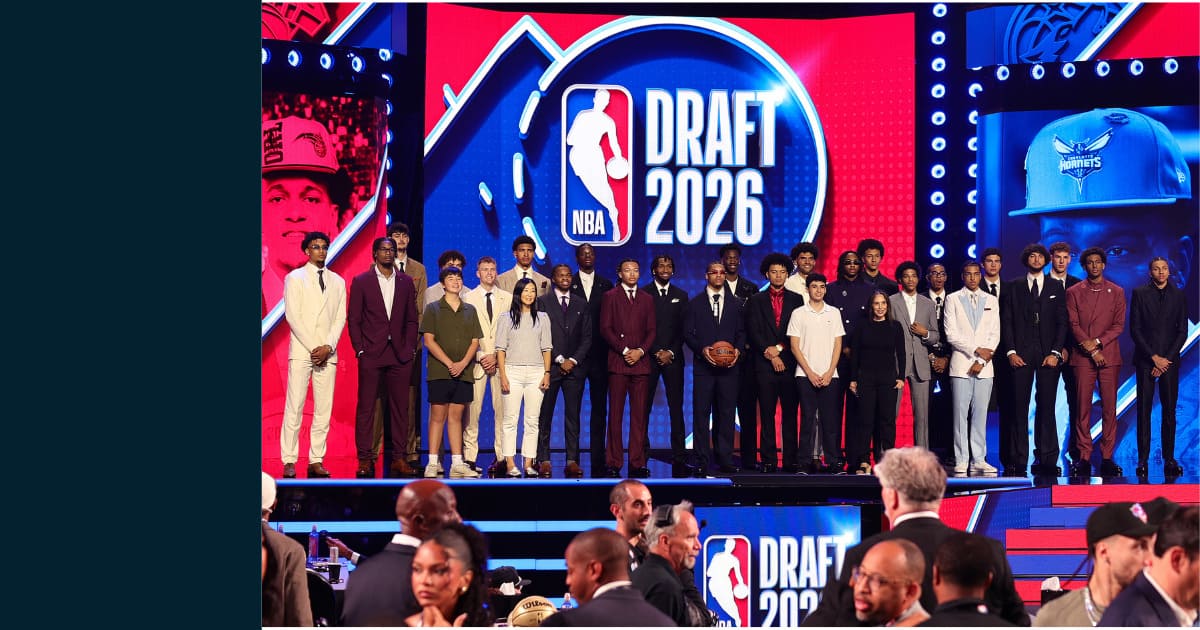
- Tampax (P&G) becoming the Official Period Care Sponsor of the WNBA, launching with Draft activations and athlete-led education initiatives.
- M&M's (Mars) joining as the Official Chocolate Partner through fan experiences and season-long content.
- Skechers expanding its investment with a league-wide partnership while highlighting its growing roster of WNBA athlete ambassadors.
These partnerships reflect how brands are expanding how women's basketball can be a platform for storytelling, community engagement, and purpose-driven campaigns. For marketers in non-endemic categories, the WNBA is proving to be one of the most receptive platforms in professional sports — and early movers like Tampax and M&M's are setting the template for category-defining partnerships.
Toronto Tempo and Portland Fire: Expansion Teams Are Creating Premium Inventory Before Tip-Off
Perhaps the strongest indicator of market demand is what is happening before expansion teams even play their first games. Expansion teams are building entire commercial ecosystems from day one. Let’s look at the WNBA's 14th and 15th franchises, the Toronto Tempo and Portland Fire.
The Toronto Tempo quickly secured a roster of founding partners that extended well beyond traditional sponsorship.
Sephora became the franchise's first Founding Partner and Official Beauty Partner, securing a jersey patch while activating through retail experiences and the "Pretty Badass" campaign celebrating women in sports.
CIBC added another premium jersey patch while integrating courtside hospitality, exclusive cardholder benefits, and its "Champions of Ambition" community platform.
The organization is also investing in a $100 million performance center, creating long-term infrastructure that supports both elite athletes and the surrounding community.
The Portland Fire offers another glimpse into where sponsorship is heading. Before playing its inaugural season, the franchise announced two jersey sponsors—Lashify and Chime—highlighting strong demand for premium inventory.
Off the court, the organization partnered with Kaiser Permanente on naming rights for a $150 million performance center shared with Portland's NWSL club, creating one of the country's premier women's sports facilities.
Media distribution has also become part of the commercial strategy. Through a partnership with Gray Media, the Fire launched Rose City SportsNet, the first 24/7 regional sports network dedicated exclusively to women's sports, expanding opportunities for fans, advertisers, and brand integrations.
For brands seeking founding-partner positioning, the window is narrow — and the franchises that haven't yet announced full partner rosters represent some of the most premium inventory in women's sports.
The Opportunity for Brands Is Expanding Alongside the League
The WNBA's commercial growth isn't being driven by a single trend. Athletes are creator-driven media brands. Rookies are entering the league with established sponsorship portfolios. Expansion franchises are monetizing premium assets before their first season. And the league continues to attract new investment from brands looking to connect with an increasingly engaged audience.
For marketers, the opportunity is no longer whether to invest in women's basketball—it's deciding where within the ecosystem your brand can create the greatest impact.
Deep Dives: 5 Athlete Investment Strategies
The most valuable WNBA partnerships aren’t one-size-fits-all. Some athletes help brands reach new audiences, others drive culture, and others represent the next generation of influence.
Azzi Fudd: Long-Term Brand Building
The athlete brands believed in before the spotlight peaked.
Azzi Fudd has been on brands' radar since high school, entering college as one of the nation's most celebrated recruits before starring at the University of Connecticut. Despite battling injuries throughout her collegiate career, Fudd remained one of the sport's most recognizable athletes thanks to her elite shooting ability, polished media presence, and longstanding relationship with one of basketball's most storied programs. She capped her college career by helping lead UConn to the 2025 NCAA National Championship and was selected No. 1 overall by the Seattle Storm in the 2026 WNBA Draft, entering the league with one of the strongest commercial foundations of any rookie.
Long before turning pro, Fudd built an impressive endorsement portfolio with brands including Curry Brand (Under Armour), Chipotle, Buick, Bose, Nerf, and DoorDash, demonstrating how companies increasingly value long-term relationships with athletes rather than waiting for professional success. Her partnership with Curry Brand has been particularly notable, with Stephen Curry personally championing her as one of the faces of the brand's future. Fudd's endorsements reflect a blend of performance, authenticity, and broad consumer appeal, making her attractive to both sports and lifestyle brands.
Brand opportunity: Fudd's trajectory illustrates the value of early investment. Brands that partnered with her before the draft secured access to one of the league's most marketable athletes at a fraction of the cost and competition they'd face today — a playbook worth replicating with the next wave of elite college talent.
Flau'jae Johnson: The Creator Economy
The athlete whose influence extends beyond the court.
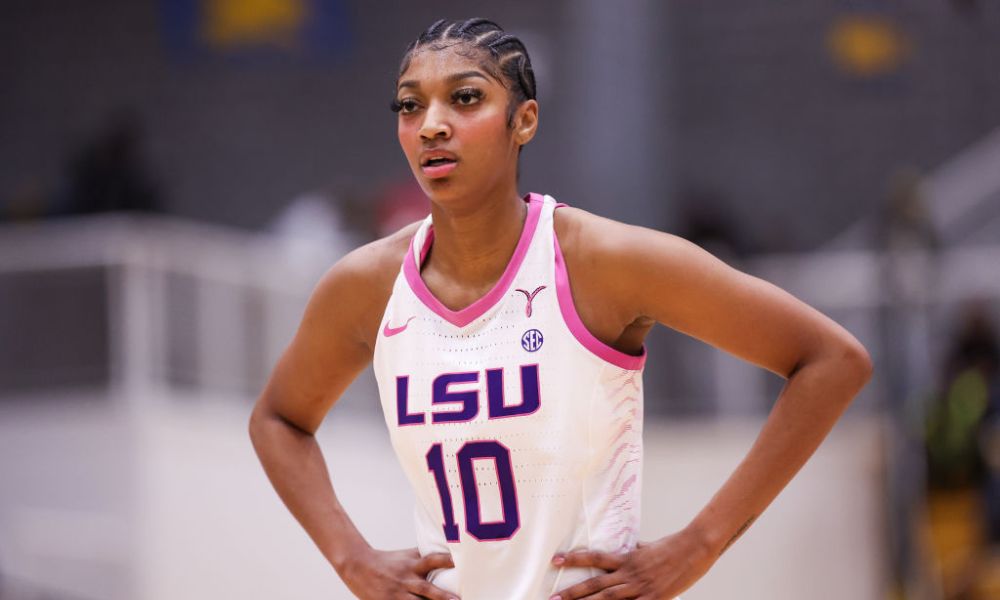
Long before becoming a professional basketball player, Flau'jae Johnson had already built a national following as both an elite athlete and an emerging music artist. After starring at LSU, where she helped lead the Tigers to the 2023 NCAA National Championship and earned All-SEC honors, Johnson entered the WNBA as one of the league's most recognizable young personalities. Her platform extends well beyond basketball—she has released original music, performed at major events, and cultivated an audience that spans sports, entertainment, and social media.
That crossover appeal is reflected in her endorsement portfolio, which includes partnerships with Puma, Powerade, JBL, Experian, Taco Bell, and Amazon, among others. Rather than simply appearing in campaigns, Johnson creates content, tells stories, and engages fans across multiple platforms, making her valuable to brands looking to connect with younger audiences in authentic ways. Her ability to move seamlessly between basketball, music, and digital media illustrates how the next generation of athlete partnerships is increasingly blending sports with the creator economy.
Brand opportunity: Johnson demonstrates that today's most valuable athlete partnerships aren't limited to game-day exposure. Athletes who can create content, shape culture, and engage audiences across entertainment and social platforms have become year-round marketing assets, giving brands new ways to reach consumers beyond traditional sports sponsorships.
Caitlin Clark: Audience Expansion
The athlete who changed the size of the audience.
Caitlin Clark entered the WNBA as one of the most anticipated athletes in women’s sports history after a record-breaking career at the University of Iowa. During her time with the Hawkeyes, Clark became the NCAA’s all-time leading scorer, won the Naismith Player of the Year award twice, and helped elevate women’s college basketball into a mainstream sports conversation. Selected No. 1 overall by the Indiana Fever in the 2024 WNBA Draft, Clark immediately translated that attention to the professional level, earning WNBA Rookie of the Year honors in 2024 and becoming one of the league’s biggest drivers of attendance, viewership, and engagement.
Her endorsement portfolio reflects brands looking to tap into her ability to reach beyond traditional basketball audiences, with partnerships spanning Nike, Gatorade, Wilson, State Farm, Bose, Xfinity, Panini, and more. Her Nike partnership — including a signature shoe — and Wilson collaboration highlight how brands are investing in athletes as product and culture drivers. Clark’s value comes from her ability to create moments that extend far beyond the court, making her one of the most powerful platforms for brands looking to expand their audience and connect with younger consumers.
Brand opportunity: Clark demonstrates how the right athlete can help brands reach new consumers, grow awareness, and bring new audiences into a category.
Angel Reese: Cultural Relevance
The athlete who turns personality into a platform.
Angel Reese has been one of the most influential basketball personalities of her generation, building a national following long before entering the WNBA. After beginning her college career at Maryland, Reese transferred to LSU, where she became a household name by leading the Tigers to the 2023 NCAA Championship and earning Final Four Most Outstanding Player honors. Selected No. 7 overall by the Chicago Sky in the 2024 WNBA Draft, Reese quickly made an impact at the professional level, setting a WNBA record for consecutive double-doubles by a rookie and earning WNBA All-Rookie Team honors.
Reese represents broad athlete influence — built around authenticity, confidence, and cultural conversation. Her endorsement portfolio includes partnerships with brands like Reebok, Beats by Dre, Reese’s, and Good American, spanning categories from sports and footwear to lifestyle and fashion. She is the first WNBA star to walk a Victoria Secret fashion show and lead one of the brand’s campaigns. Reese has built a distinct identity that resonates beyond basketball, giving brands an opportunity to connect with younger audiences through personality, storytelling, and community.
Brand opportunity: Reese shows how athletes become lifestyle platforms, helping brands participate in conversations that extend beyond sports.
A’ja Wilson: Legacy + Leadership
The blueprint for the modern superstar.
A’ja Wilson represents the evolution of the traditional sports endorsement model: elite performance paired with long-term brand-building power. Wilson starred at the University of South Carolina, where she became one of the most decorated players in college basketball history, winning the 2017 NCAA Championship, earning National Player of the Year honors, and establishing herself as the No. 1 overall pick in the 2018 WNBA Draft. Since joining the Las Vegas Aces, Wilson has become the face of the franchise and one of the most accomplished players in league history, winning multiple WNBA MVP awards, Defensive Player of the Year honors, and championships.
Her partnerships with brands including Nike, Ruffles, and Mountain Dew reflect her ability to connect performance, leadership, and personality. Her Nike A’One signature collection demonstrates the shift from athlete endorsement to athlete collaboration, with Wilson influencing product design, storytelling, and consumer connection. As one of the most respected figures in women’s basketball, Wilson provides brands with something difficult to replicate: credibility built over time.
Brand opportunity: Wilson is proof that the most durable athlete partnerships aren't built on hype cycles — they're built on sustained excellence. For brands seeking multi-year ambassadors who appreciate in value, she's the blueprint..
Footnote: Our Methodology
A deal is defined as an active partnership agreement between a brand and a sports property—including a league, team, venue, event, athlete, or governing body—that includes one or more sponsorship assets, rights, or marketing benefits during the applicable time period.
This analysis includes all 15 WNBA teams for the 2026 season. Data reflects active partnerships from the past 12 months and may include qualifying NIL partnerships that remained active as athletes transitioned from college to the professional ranks.
.png)
.png)
.png)
.png)
.png)
.png)
%20(2).png)
.png)
.png)
.png)
.png)
.png)
.png)
%20(1).png)
.png)
.png)
.png)
.png)

.png)
.png)
%20(1).png)

.png)
.png)
.png)
.png)
.png)
.png)
.png)
.png)
.png)
.png)





.png)


















.jpg)