.png)
Get In-Depth Data to Fuel Your Strategy
Over six weeks and 16 host cities, the SponsorUnited team was on the ground across the globe tracking how brands actually showed up. Here's what stood out.
Once the 2026 FIFA World Cup kicked off, our worldwide team of SponsorUnited scouts fanned out — through host cities, airports, grocery aisles, and international markets alike — capturing brand activity as it happened in the wild. Nearly 200 field sightings, screenshots, and press clips came in from teammates stationed everywhere from Seattle to Atlanta, Boston to Dallas, Kansas City to Monterrey, Amsterdam to Cairo. Together the team formed a running, real-time record of how brands showed up once the tournament began.
Which Brands Had the Most Off-Pitch Activity
The loudest activity came from the tournament's global partners, and much of it leaned into spectacle. Hyundai deployed a Boston Dynamics Atlas humanoid robot at the New York/New Jersey stadium — the first time functional robotics had a role at a World Cup — while its "Next Starts Now" campaign wrapped an entire high-rise tower on the Miami skyline, sharing air rights with a Modelo mural next door. Visa paired its sponsorship with a "Dinner on the Pitch" experience in the San Francisco Bay Area and a Chase Sapphire tie-in. And adidas closed the loop by unveiling the official match ball for the Final just two weeks before Louis Vuitton's trophy trunk made its own debut as official supplier. Hisense, meanwhile, quietly built out sensory-inclusive rooms in all 16 host stadiums with KultureCity — the kind of activation that shows up in every accessibility and inclusion story written about the tournament.
CPGs and Tech Scaled Up at Grocery Stores, Transit
If the global partners won on scale, the CPG brands won on saturation. Nobody documented this better than the teammates working the Pacific Northwest and Kansas City circuits. Between Seattle-Tacoma and Portland alone, Michelob Ultra, Coca-Cola, Lay's, Stella Artois, and Unilever blanketed grocery store end-caps, transit signage, and the Soccer Celebration fan event — often five or six brands deep in a single supermarket aisle.
Tech had a seat at that same fan event, too: Lenovo and Intel co-branded a full activation there, pairing a laptop lineup with an AI-powered photo experience — a natural extension of the "AI Fan Studio" in-store push Lenovo was already running in Toronto and Vancouver, and one of a handful of Lenovo placements the team tracked throughout the tournament. A separate grocery run through Kansas City turned up Jim Beam, Casamigos, Don Julio, and Price Chopper all running World Cup tie-ins on the same shelf, next to Michelob Ultra point-of-sale that showed up in three different formats in one store. It's a reminder that much of a tournament's commercial footprint isn't the primetime ad.
Once the 2026 FIFA World Cup kicked off, the SponsorUnited team fanned out — through host cities, airports, grocery aisles, and international markets alike — capturing brand activity as it happened in the wild. Nearly 200 field sightings, screenshots, and press clips came in from teammates stationed everywhere from Seattle to Atlanta, Boston to Dallas, Kansas City to Monterrey, Amsterdam to Cairo. Together the team formed a running, real-time record of how brands showed up once the tournament began.
The loudest activity came from the tournament's global partners, and much of it leaned into spectacle. Hyundai deployed a Boston Dynamics Atlas humanoid robot at the New York/New Jersey stadium — the first time functional robotics had a role at a World Cup — while its "Next Starts Now" campaign wrapped an entire high-rise tower on the Miami skyline, sharing air rights with a Modelo mural next door. Visa paired its sponsorship with a "Dinner on the Pitch" experience in the SF Bay Area and a Chase Sapphire tie-in. And adidas closed the loop by unveiling the official match ball for the Final just two weeks before Louis Vuitton's trophy trunk made its own debut as official supplier. Hisense, meanwhile, quietly built out sensory-inclusive rooms in all 16 host stadiums with KultureCity — the kind of activation that doesn't trend on its own but shows up in every accessibility and inclusion story written about the tournament.
If the global partners won on scale, the CPG brands won on saturation. Nobody documented this better than the teammates working the Pacific Northwest and Kansas City circuits. Between Seattle-Tacoma and Portland alone, Michelob Ultra, Coca-Cola, Lay's, Stella Artois, and Unilever blanketed grocery store end-caps, transit signage, and the Soccer Celebration fan event — often five or six brands deep in a single supermarket aisle. Tech had a seat at that same fan event, too: Lenovo and Intel co-branded a full activation there, pairing a laptop lineup with an AI-powered photo experience — a natural extension of the "AI Fan Studio" in-store push Lenovo was already running in Toronto and Vancouver, and one of a handful of Lenovo placements the team tracked throughout the tournament. A separate grocery run through Kansas City turned up Jim Beam, Casamigos, Don Julio, and Price Chopper all running World Cup tie-ins on the same shelf, next to Michelob Ultra point-of-sale that showed up in three different formats in one store. It's a reminder that much of a tournament's commercial footprint isn't the primetime ad.
Targeted Airports Proved Prime Sponsorship Territory
Airports turned out to be their own advertising battleground. Newark's Terminal B alone yielded sightings of FIFA, Audible, Bank of America, NYC Tourism, Coca-Cola, and Stella Artois within a few gates of each other, while Visa took over arrivals signage at the same airport a few weeks later. Houston's IAH ran a Coca-Cola and Powerade sampling activation, and American Airlines put the tournament logo on the fuselage next to the boarding door out of Charlotte. Then there's the stuff you can't miss even if you're not looking for it: a giant "We Are 26" branded soccer ball parked at LAX, a Home Depot-and-Verizon takeover of Atlanta's MARTA transit stations and billboards, and downtown Dallas hotel wraps from Coca-Cola timed to match weeks.
Creator-Marketing Scored Big
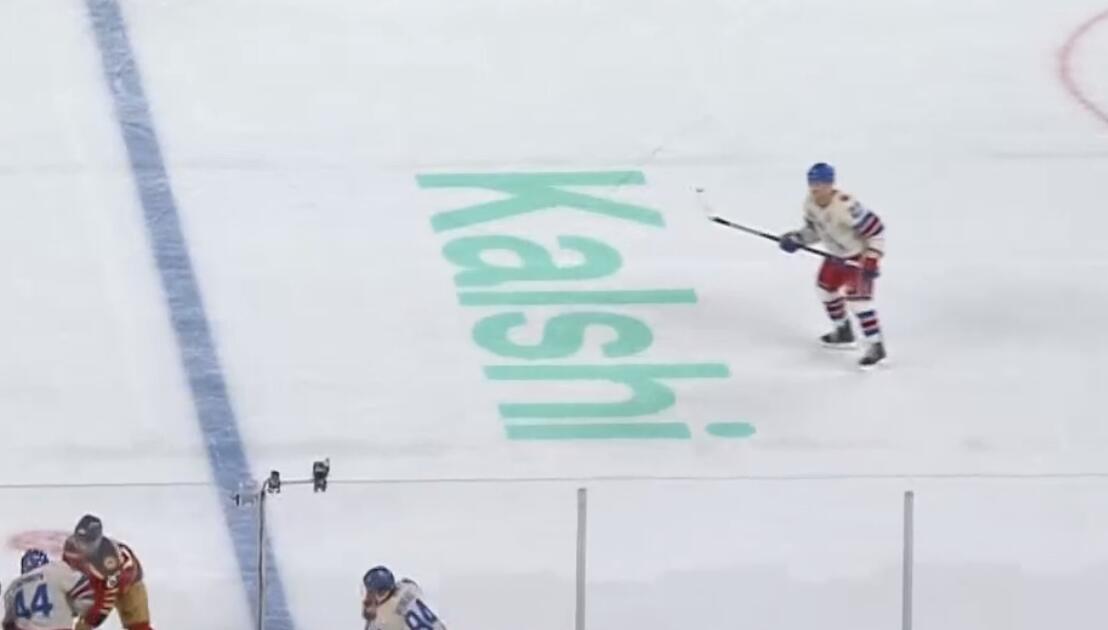
Athlete and creator marketing carried its own thread throughout. Kalshi ran an Erling Haaland look-alike contest alongside a legends spot featuring Marcelo, Clint Dempsey, and Rafael Varane; Wells Fargo tied its Visa card to Christian Pulisic; American Eagle built creative around Lamine Yamal; and Dove, Lay's, and adidas jointly staged a "Creators Cup" series on YouTube. adidas also went deeper regionally than a jersey drop, partnering with Mexican social enterprise Someone Somewhere on an artisan-made lifestyle collection tied to Mexico's third kit, worked by artisans in Naupan, Puebla.
The Global Sponsorship Footprint
The activity also looked markedly different outside North America. Argentina's Quilmes gathered tens of thousands of fans under a giant branded banner for "Mesa de Astros," bringing football legends together; Coca-Cola put Mohamed Ramadan on billboards across Egypt; and in the Netherlands, Steltz, BYD, Chery, and M Line all leaned on retired or active Oranje players — Rafael van der Vaart, Edwin van der Sar, Bart Verbruggen — for campaigns that ran alongside heavy national OOH.
FIFA House opened in New York for the closing stretch, Topps unveiled its halftime-show brand platform alongside Bank of America, DoorDash, Visa, and YouTube Music, Post Malone was confirmed to headline the closing ceremony, and LEGO marked the moment with a limited-edition trophy set celebrating Spain's second star. It's a fitting bookend to a stretch that started with a simple mandate to keep eyes open on the ground and ended up as the most complete real-time record we have of how sponsorship actually looks, city by city, aisle by aisle, over the course of a World Cup.
.png)
.png)
.png)
.png)
.png)
.png)
%20(2).png)
.png)
.png)
.png)
.png)
.png)
.png)
%20(1).png)
.png)
.png)
.png)
.png)

.png)
.png)
%20(1).png)

.png)
.png)
.png)
.png)
.png)
.png)
.png)
.png)
.png)
.png)





.png)



















.jpg)