.png)
Get In-Depth Data to Fuel Your Strategy
Trend #3: The Evolution of Community Sponsorships
This new series examines trends we are seeing across sports sponsorships with supporting data insights from our industry-leading platform.
On a Sunday afternoon at Petco Park, Military Appreciation Day unfolds through a series of coordinated moments. Service members receive discounted concessions inside a branded hospitality zone. A veteran is recognized during an in-game feature. Spectators leave with the impression that both the team and its sponsor demonstrated a meaningful commitment to their community.
That experience is the result of a sponsorship agreement between the San Diego Padres and USAA. Rather than being an auxiliary activation layered onto a larger deal, it is an embedded component of the partnership itself.
Community-based sponsorships have long been part of the sports ecosystem. Teams have historically served as civic anchors, and brands have leveraged that position through youth clinics, literacy campaigns, military recognition programs, health awareness initiatives, and more. What has changed in recent years is their structural importance within the deals.
Community initiatives are increasingly integrated into the core architecture of sponsorships, influencing scope, activation design, and renewal strategy. Across leagues, these initiatives are increasingly structured as formal sponsorship assets that are tied to specific event formats, recurring platforms, and measurable participation. Our data reveals which types of initiatives are most frequently activated, which categories and brands are investing most heavily, and how league utilization varies by industry.
Heading into 2026, they function as foundational partnership assets. Read on to learn more.
From Peripheral Programming to Partnership Infrastructure
For years, community activations were often appended to sponsorship agreements without fundamentally shaping them, such as a charitable donation, a themed night, or a short-term awareness campaign that would sit alongside signage and media rights as a complementary gesture.
Today, those initiatives are more likely to function as repeatable platforms that:
- Operate across multiple seasons
- Scale across markets
- Integrate digital, experiential, and content rights
- Support long-term renewal conversations
This shift mirrors broader changes in sponsorship evaluation. Exposure remains important, but brands are increasingly seeking accountability, local credibility, and the ability to translate partnerships into measurable community engagement. Sports properties, with their geographic permanence and civic presence, provide the infrastructure for that evolution. Community sponsorship has matured to take advantage of that foundation.
The Scope of Community Sponsorship Activity
SponsorUnited tracks Community/CSR initiatives as a defined sub-asset within Property Rights & Exposure across major professional and collegiate leagues. In the 2025–26 cycle, that community-based sponsorship activity spans 1,615 brands and 253 properties across eight leagues (NFL, MLB, NBA, NHL, MLS, WNBA, NWSL, and the Power 4), totaling 3,612 formally negotiated community assets across 23 distinct asset types. These figures reflect sponsorship rights embedded within commercial agreements—not standalone philanthropic grants—and illustrate how brands are formally allocating activation resources within sports partnerships. When viewed collectively, the activity shows clear concentration around a defined set of causes.
Most Activated Community Asset Types (by % of Total Assets)
Looking at brand participation trends, youth initiatives is again in the lead with 28% in total assets and nearly 45% of brands activating community assets participate in youth-focused programs. That’s compared 22% of brands for education, a 16% tie for military initiatives and health-related causes, and 11% for environmental programs.
Why Youth and Education Initiatives are so Popular with Brands
Youth-focused programs align naturally with school calendars and organized sports seasons, making them easier to structure as recurring, annual initiatives. They also extend brand visibility into family settings and multi-generational households, creating broader community reach.
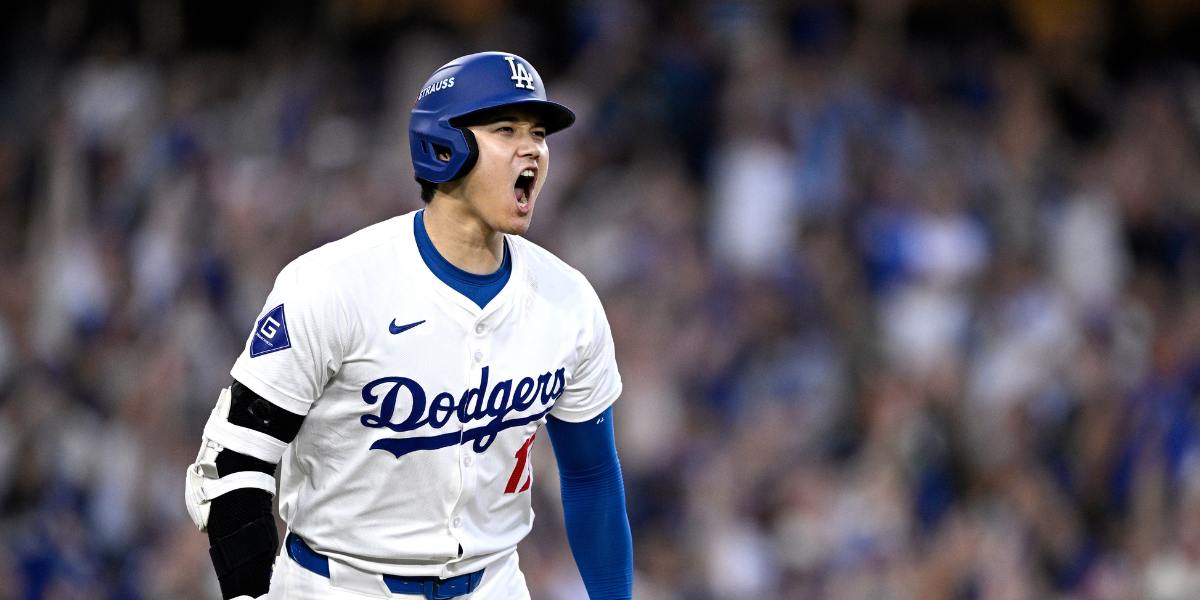
The Los Angeles Dodgers’ Back-to-School Resource Fair presented by General Mills demonstrates how these initiatives operate within modern sponsorship frameworks. LAUSD students received school supplies and food products, while Vanessa and Natalia Bryant distributed sneakers on behalf of the Mamba and Mambacita Sports Foundation. The activation blended product integration, celebrity involvement, and direct resource distribution within a renewable annual format.
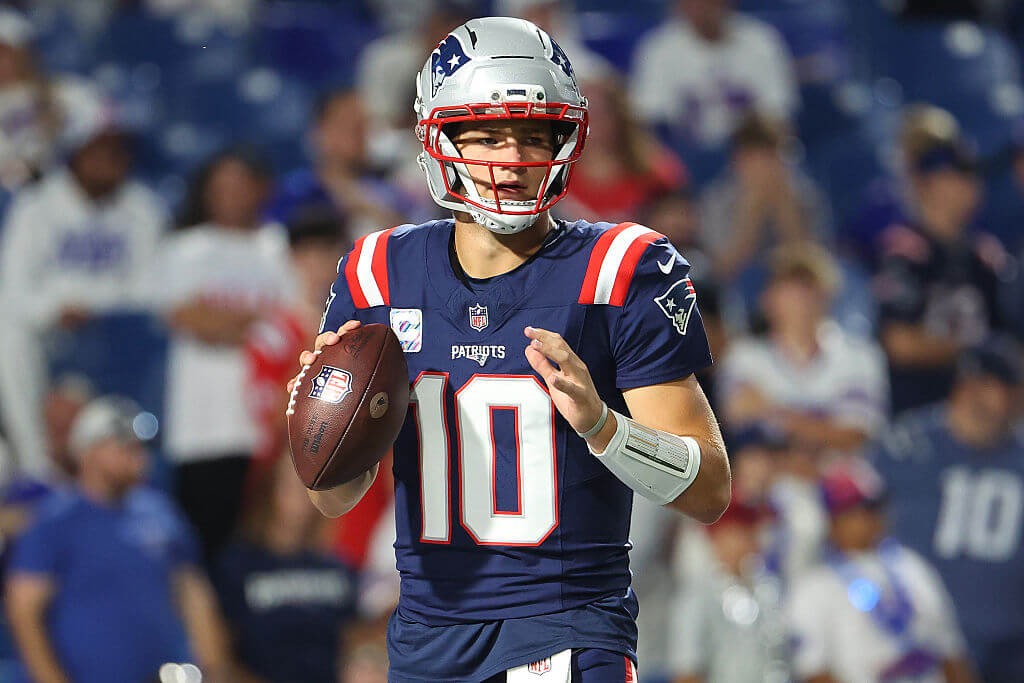
The New England Patriots partnered with Dr. Seuss and Creative Minds Publications to launch the 9th annual #TackleReading initiative at the Lillian Feinstein at Sackett Street School. The event brought together players and school leaders to celebrate literacy, with students taking part in story time and receiving books to encourage a love of reading.
The Houston Texans’ TORO’s Math Drills program with ConocoPhillips has reached nearly 2,500 teachers and over one million students across 20 states since 2017. It combines educational content, brand alignment, and long-term programmatic continuity.
Recognition-driven initiatives follow a similar structure. The Colorado Avalanche’s “Most Valuable Teacher” program presented by Ford honors educators monthly with game-day experiences and classroom support, creating ongoing engagement rather than a single campaign moment.
Across these examples, youth and education initiatives function as scalable partnership platforms.
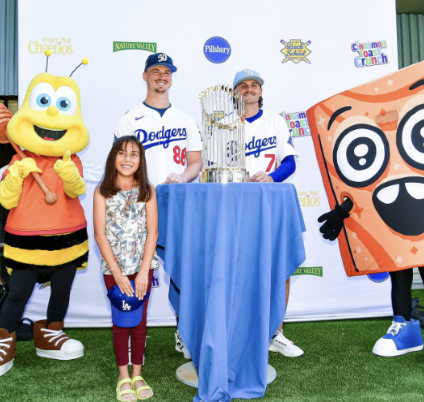
Los Angeles Dodgers × General Mills
Back-to-School Resource Fair — LAUSD students received supplies & food while Vanessa & Natalia Bryant distributed sneakers, blending product integration and celebrity involvement.

New England Patriots × Dr. Seuss
#TackleReading brought players and school leaders together for story time and book distribution to promote literacy through annual engagement.
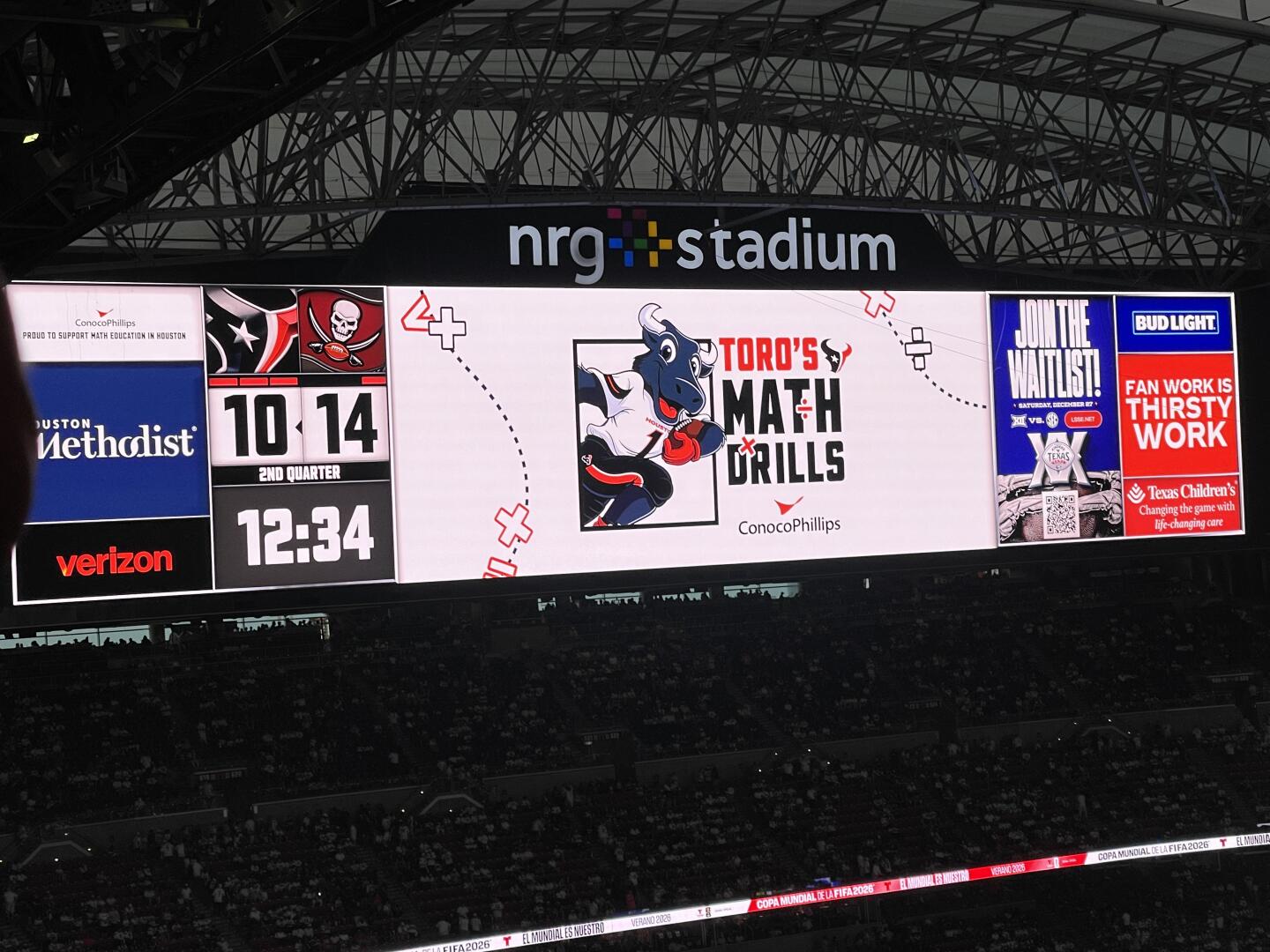
Houston Texans × ConocoPhillips
TORO’s Math Drills has reached ~2,500 teachers and 1M+ students across 20 states since 2017, aligning education with sustained brand programming.
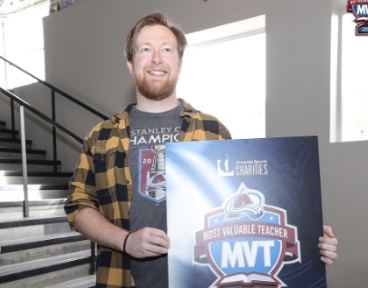
Colorado Avalanche × Ford
Most Valuable Teacher honors educators monthly with gameday experiences and classroom support to sustain year-round engagement.
Military and First Responders: Recognition with Structure
Military-focused initiatives account for 11 percent of tracked community sponsorship assets, with 16 percent of brands participating in this category. Military initiatives illustrate how community sponsorship can combine appreciation, participation, and measurable return.
The San Diego Padres and USAA’s Military Appreciation Sundays integrate discounted ticketing, exclusive hospitality zones, and in-game recognition into a coordinated seasonal program.
In Houston, the Rockets partnered with Toyota and Chick-fil-A to support veterans at the Tunnel to Towers Veterans Village. Players served lunch, distributed hygiene kits, and stocked the Veteran’s Canteen. The activation blended corporate collaboration, player involvement, and direct service delivery.
The Packers’ VEBT Relief Program presented by Verizon ties veteran debt relief directly to team performance, erasing $100,000 in local veteran debt per win up to a $1 million threshold. By linking on-field success to measurable financial outcomes, the initiative transforms recognition into quantifiable impact.
Health and Wellness: Institutional Alignment
Health-related initiatives account for 9 percent of tracked assets, with healthcare emerging as one of the most active categories overall.
The New York Giants’ Tackle Kids Cancer program with Hackensack Meridian Health integrates hospital visits, fundraising campaigns, game-day experiences, and executive leadership involvement. Rather than existing as a marketing overlay, the partnership reflects institutional alignment between property and sponsor.
Programs such as PT Solutions’ sponsorship of the “She Is Football” event with the Tampa Bay Buccaneers demonstrate how health, inclusion, and participation intersect within community sponsorship strategies.
Health initiatives frequently extend beyond visibility into operational collaboration, reinforcing credibility in-market.
Environmental and Crisis Response Activation
Environmental causes account for 7 percent of tracked community sponsorship assets, though their visibility often exceeds their numerical share due to strong storytelling potential.
The Seattle Seahawks’ “Go The Extra Yard Challenge” with Coca-Cola encouraged fans to adopt environmentally conscious behaviors, including recycling, public transit use, and plant-based meals. Participants earned rewards such as tickets and merchandise, extending the partnership narrative into daily routines.
The Dodgers’ partnership with Fanatics and the broader Los Angeles sports community to support wildfire relief through LA Strong merchandise illustrates how sponsorship infrastructure can mobilize quickly in response to local crises. Proceeds were directed to the American Red Cross and the LA Fire Department.
Environmental initiatives increasingly blend ESG commitments with participatory engagement.
Category Concentration and League Utilization
Community sponsorship activity is not evenly distributed across the market.
A relatively small group of national advertisers accounts for a disproportionate share of activations, including:
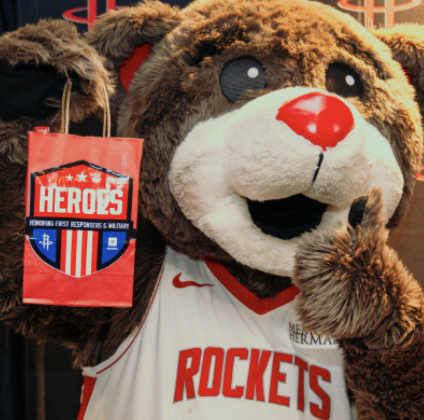
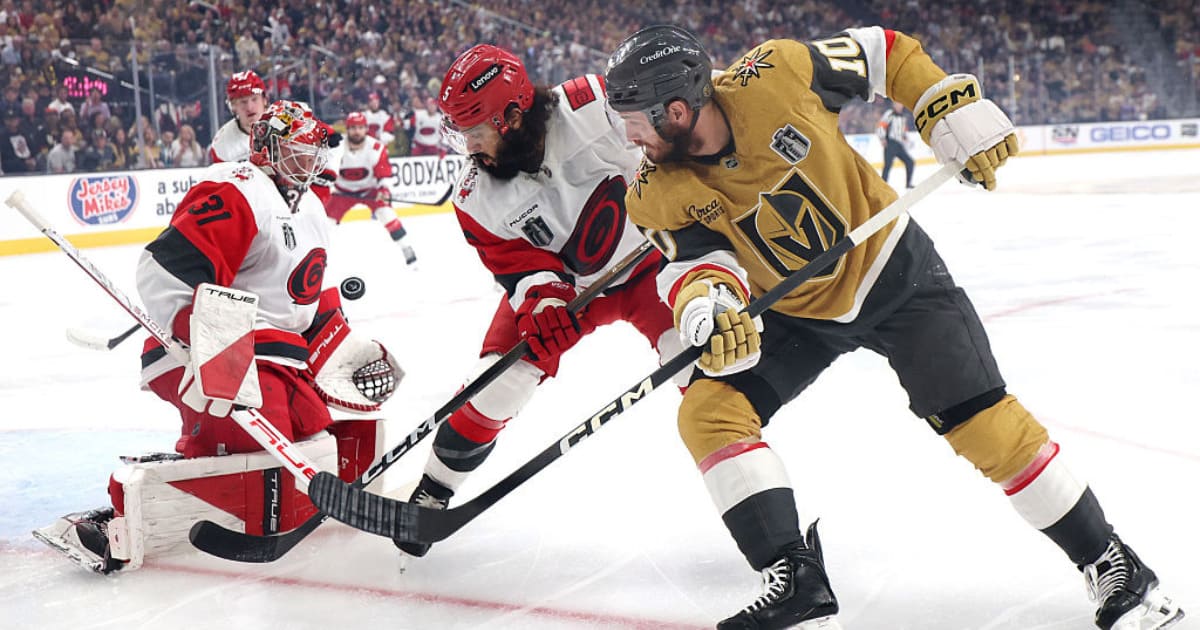
Houston Rockets × Toyota
In honor of 9/11 first responders, the Rockets and Toyota recognized veterans and local police and fire members by serving lunch, stocking canteens, and distributing hygiene kits and tickets.
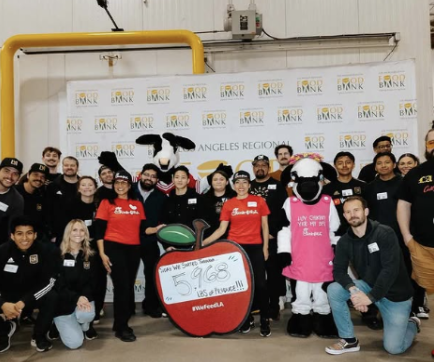
LAFC × Chick-fil-A
LAFC and Chick-fil-A support the LA Regional Food Bank with grants and post-win rewards through the Chick-fil-A app, driving ongoing hunger relief in Los Angeles.

Green Bay Packers × Verizon
The Packers’ VEBT Relief Program presented by Verizon erases $100,000 of local veterans’ debt per win, delivering up to $1 million in total relief.
At the category level, activity concentrates in sectors where trust and long-term relationships are central to business performance.
Most Active Categories – % of Community Assets
Looking deeper, league utilization varies meaningfully by category.
Most Frequently Utilized League by Category
Financial brands most frequently activate community initiatives within MLS properties, while healthcare, insurance, and automotive brands show higher utilization within the NFL. Food and beverage distribution brands appear most frequently within the NHL.
These patterns likely reflect a mix of demographic alignment, market structure, and activation flexibility rather than strict category segmentation. Community sponsorship strategies are deployed where they best support local objectives and audience reach.
Programs such as LAFC and Chick-fil-A’s hunger relief initiative illustrate this interplay between category and league. After home wins, fans receive digital rewards while Chick-fil-A provides grants to the LA Regional Food Bank, combining performance triggers, digital engagement, and measurable community impact.
Similarly, the Buffalo Sabres’ Thanksgiving turkey drive with Tops Friendly Markets incentivizes food donations with ticket vouchers, reinforcing reciprocal engagement between property, sponsor, and community.
Across categories and leagues, the structural traits remain consistent:
- Repeatability
- Multi-touch activation
- Performance or participation triggers
- Clear impact narratives
What This Signals for 2026 and Beyond
Community-based sponsorships are not emerging as a new headline trend. They are continuing to evolve and solidify as structural components of modern sports partnerships.
They offer brands:
- Year-round engagement
- Measurable participation
- Locally resonant storytelling
- Renewability across contract cycles
As sponsorship effectiveness is increasingly evaluated through accountability and long-term value, community-based assets provide something traditional inventory cannot. They embed brands within the civic life of a market.
The evolution has been gradual, but its implications are significant. Community sponsorship is no longer peripheral to the deal. In many cases, it helps define it.
.png)
%20(1).png)
.png)
.png)
%20(1).png)

.png)
.jpg)
.jpg)
.jpg)


.png)











.jpeg)
.png)



.png)
.png)


_page-0001.jpg)