Get In-Depth Data to Fuel Your Strategy
Trend #2: Innovation in Tech-Led Fan Experiences
This new series examines trends we are seeing across sports sponsorships with supporting data insights from our industry-leading platform.
Immersive technology is moving from novelty to structural activation layer within sports sponsorship. Augmented reality (AR) deployments tracked across properties are increasing year over year, and more than 250 brands are now activating AI-driven experiences across live sports and entertainment environments, according to SponsorUnited platform data.
Increasingly, immersive tools are turning sponsorship into a measurable performance channel — one that connects engagement, identity, commerce, and content distribution in real time.
Ahead of the release of Gladiator II, Pepsi partnered with Regal to transform a Times Square theater into “The Pepsi COLAsseum,” layering physical set design with augmented reality—technology that overlays digital visuals and interactive elements onto a live environment in real time. The experience featured two-story AR costume try-ons, personalized accessories, 360-degree content capture, and a multisensory 4DX screening.
The activation blended augmented reality, immersive storytelling, personalization, and large-scale content capture within a single branded environment. Experiences like this illustrate how immersive technology is driving innovation and reshaping how brands design and activate their sponsorship strategies.
What began as isolated AR demos and interactive overlays is evolving into a scalable activation layer that connects identity, commerce, and content creation across sports and live entertainment. The shift is measurable.
The Measurement Framework: Why AR Leads
To analyze this shift, SponsorUnited tracked AI- and AR-driven activations across sports and live entertainment, measuring year-over-year growth in tech-led sponsorship executions and evaluating activation types, asset deployment, and category adoption.
AR currently represents the most consistently trackable immersive activation layer within sponsorship portfolios, making it the clearest performance indicator in the category today. SponsorUnited monitors 25 AR-focused brands with repeatable deployments across properties.
AI integrations are scaling more broadly, with more than 250 brands activating this year, up from 201 last year. Asset-level documentation, however, remains uneven, often concentrated around marquee events, enterprise-level integrations, or backend workflow deployments that are less visibly tied to discrete sponsorship assets. As reporting standardizes, AI’s measurable footprint will expand. For now, AR provides the most transparent view into how immersive technology is reshaping sponsorship economics.
For brands evaluating sponsorship through a performance lens, AR offers the most measurable framework available today and therefore serves as the primary focus of this analysis.
Strategic Implications for Brands
Immersive technology is emerging as a structural activation layer within sponsorship portfolios. AR delivers measurable engagement. AI personalization strengthens data capture. Commerce integration shortens the path from interaction to transaction. Content tools extend reach organically.
As pressure mounts on marketing budgets, these capabilities matter more than ever, repositioning sponsorship as an accountable growth lever rather than a discretionary awareness line item.
Brands evaluating this space should assess scalability across properties, integration with digital commerce ecosystems, depth of personalization infrastructure, and operational repeatability.
The trajectory suggests sustained expansion. As deployment standardizes and measurement improves, tech-led experiences will continue reshaping how sponsorship drives engagement, commerce, and content distribution.
From Installation to Integration
The shift from installation to integration reflects a broader change in expectations: immersive activations are increasingly designed to drive measurable outcomes, not just momentary engagement.
Early AR activations emphasized visual novelty including filters, overlays, and short-lived engagement mechanics. Recent executions prioritize functional integration.
Experiences increasingly connect identity recognition, commerce enablement, and content creation. Identity triggers recognize team allegiance or personal preference. Commerce layers support virtual try-ons and product visualization. Content tools generate personalized media designed for distribution.
Across properties, immersive tools are becoming embedded into the broader fan journey rather than positioned as standalone attractions.
Category Adoption and Asset Mix
Adoption is accelerating across Financial Services, Retail and E-commerce, Technology, and Entertainment , categories with digital commerce ecosystems capable of scaling personalization.
Deployment now spans in-venue installations, mobile-triggered AR journeys, and broadcast or content-layer enhancements. Season-long integrations further signal maturation, as immersive elements extend beyond single-event novelty into repeatable frameworks.
Generative AI Expands the Framework
Generative AI is broadening immersive engagement into content production and real-time information delivery. AI-powered prompts, automated creative production, real-time statistical insights, and enterprise workflow integrations are expanding the technology layer across both fan-facing and operational environments.
Immersive technology increasingly spans both experiential and enterprise layers of sponsorship.
AR Integrations We Love
Mastercard x Arnold Palmer Invitational
Deployed an AI-powered 'Virtual Retail' experience allowing attendees to navigate merchandise using eye-tracking technology while receiving personalized virtual try-ons. The activation blended biometric interaction with AI-assisted commerce within a live sports setting.

Morgan Stanley x THE PLAYERS Championship
Launched 'Tour Through Time,' a mobile AR experience reliving 50 years of tournament history through guided storytelling from Justin Rose. The activation extended brand narrative into immersive historical engagement.

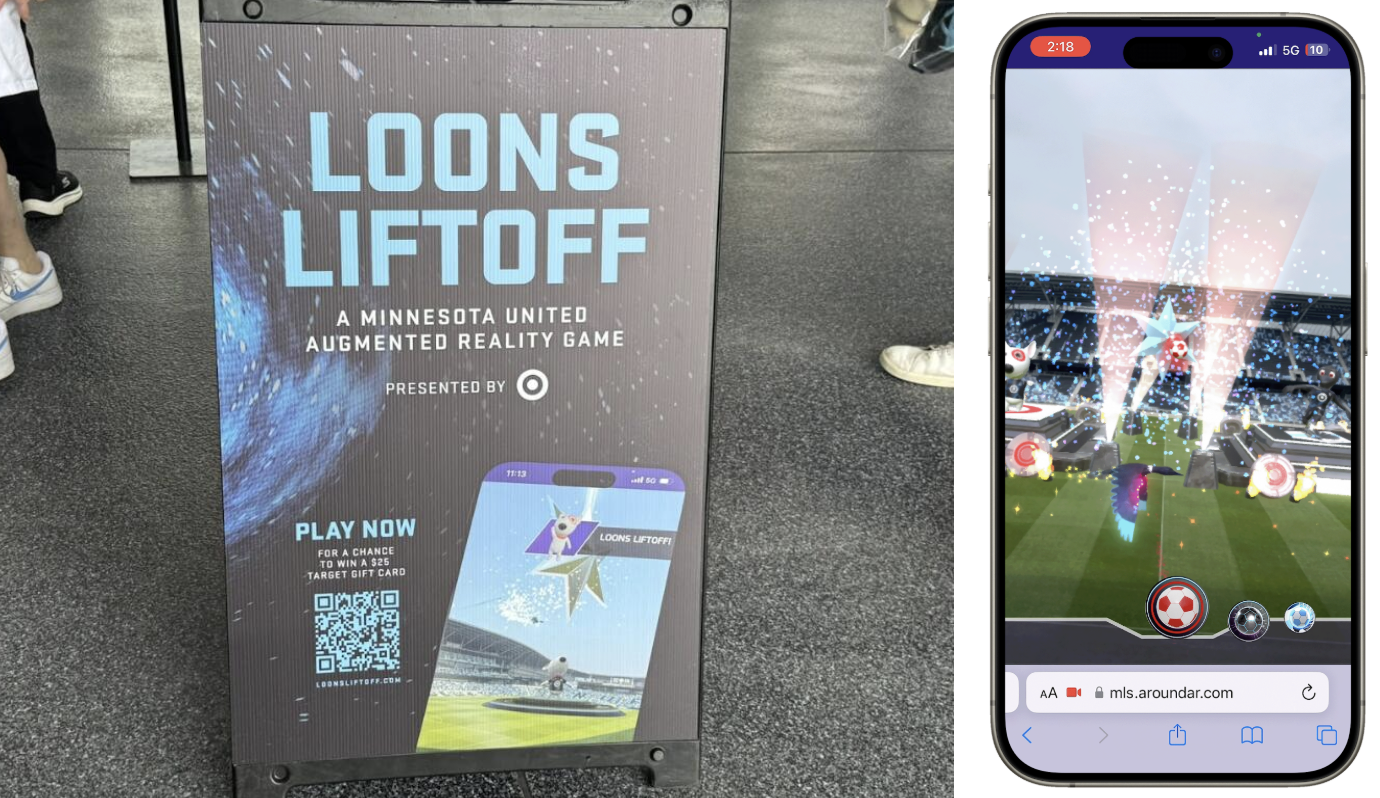
Target x Minnesota United FC
Integrated AR-driven engagement to connect retail storytelling with in-venue participation, reinforcing brand identity within a team partnership environment.
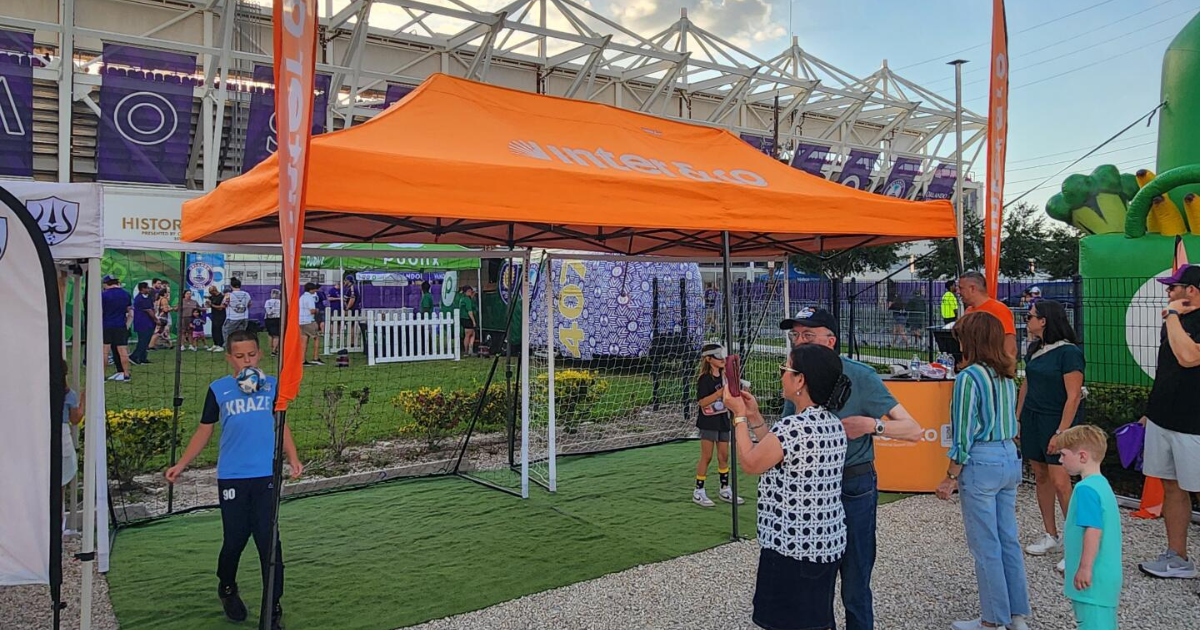
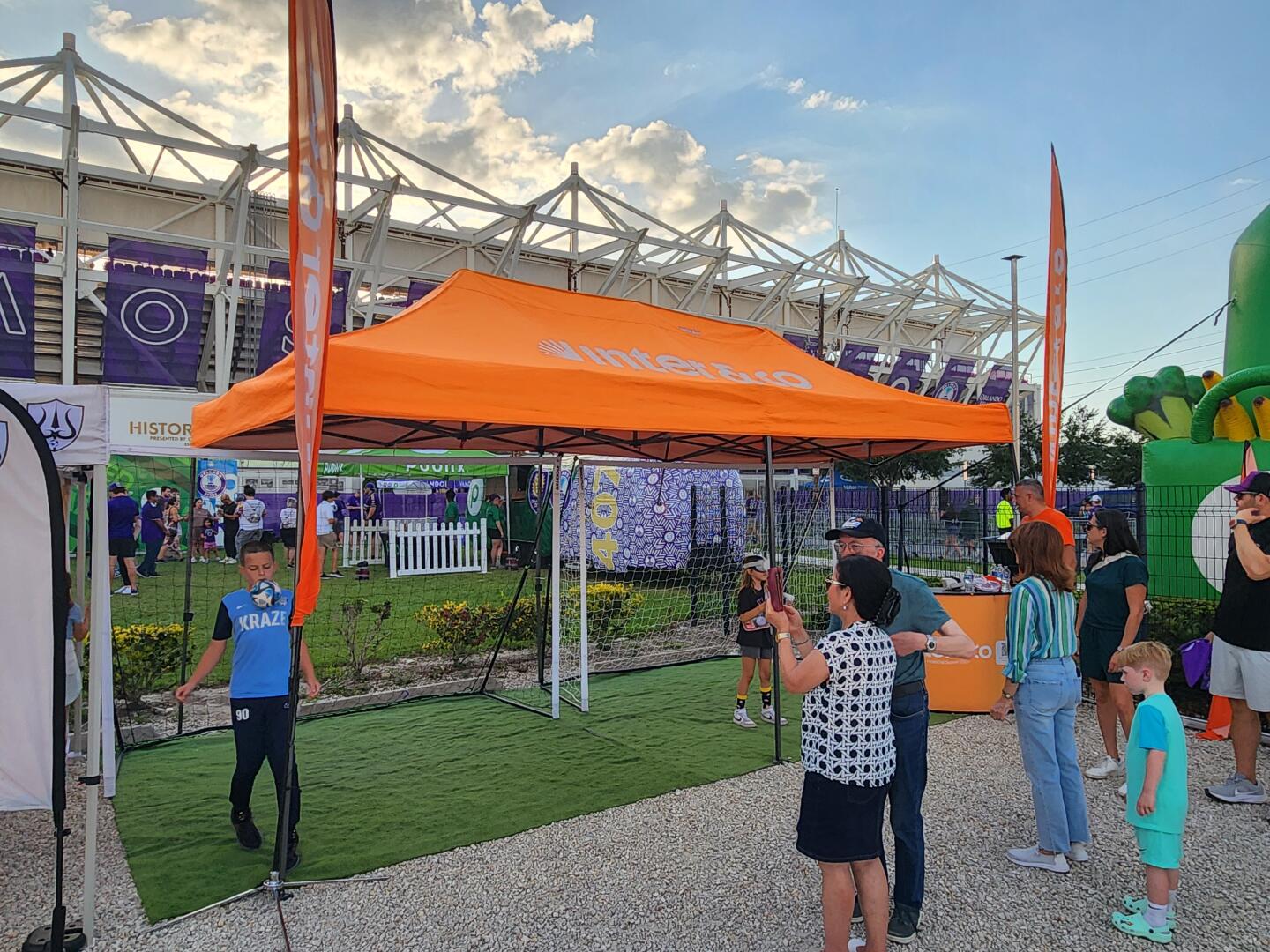
Inter&Co x Orlando City SC
Created a recurring in-venue AR goalkeeping challenge featured throughout the season, embedding interactive participation into the club’s event calendar.
Google Shopping x Lollapalooza
Enabled festival goers to virtually try on fashion and beauty products using AI-powered visualization tools, linking live engagement with real-time commerce pathways.

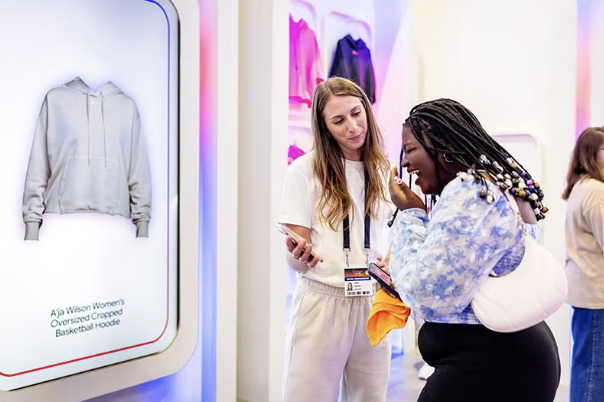
Google x WNBA
Developed a multi-touchpoint experience featuring virtual try-ons, AI-enhanced photography, personalized highlight reels, and social-ready content distribution.
Pepsi x Gladiator II (Paramount Pictures)
Built 'The Pepsi COLAsseum,' an immersive environment featuring AR costume try-ons, personalized accessories, large-scale projection, and a multisensory 4DX film screening.
.png)
USAA x Army–Navy Game
Enabled fans to virtually try on historic team uniforms via AR after scanning tickets, using identity recognition to drive personalized participation and shareable content.

.png)

%20(1).png)
.png)
.png)
%20(1).png)

.png)
.png)
.jpg)
.jpg)
.jpg)


.png)










.jpeg)

.png)




.png)
.png)



_page-0001.jpg)